
Frame-32
Frame-7
Frame-32
Frame-7
The United Arab Emirates offers one of the most attractive tax regimes in the world for a tax resident Individuals: zero income tax, zero taxation on dividends, zero taxation on capital gains from the sale of securities, no wealth tax, and no inheritance tax. However, since June 1, 2023, the UAE has applied a corporate tax of 9 % on profits exceeding 375,000 dirhams (Federal Law No. 47/2022).

Establishing tax residency requires obtaining a residence visa (investor visa, property owner visa, or Golden Visa) and maintaining a physical presence of at least 90 days within any 12 consecutive months to obtain a tax residency certificate valid against French authorities. The France-UAE tax treaty of July 19, 1989, determines the allocation of taxing rights between the two states on French-source income received by Emirati residents.

The personal tax regime in the Emirates

In the United Arab Emirates, resident individual taxpayers benefit from virtually no direct taxation:

Type of incomeWater tax ratesFrance Comparison
Income from work (wages, salaries)0 %Scale up to 45 % + CSG/CRDS
Dividends0 %PFU 30 % + possible CEHR
Capital gains on securities (sale of securities)0 %PFU 30 %
Capital gains on real estate0 %19 % + 17.2 % social security contributions
Local rents WATER0 %Not applicable
Wealth tax (equivalent to IFI)NoneIFI (French wealth tax) on net real estate assets exceeding €1.3 million
Inheritance and gift taxesNoneUp to 45 % in direct line

VAT and indirect taxes

The UAE has applied a VAT rate of 5 % since 2018 (one of the lowest in the world) on consumption. Municipal taxes on rents (5 % in Dubai for residents) and tourist taxes should be noted as actual but marginal expenses compared to the direct French taxes avoided.

Corporate tax 

Since June 1, 2023, companies established in the UAE have been subject to a corporate income tax of 9 % on the portion of annual profit exceeding AED 375,000 (approximately €94,000 at the 2026 exchange rate). Below this threshold, the rate is 0 %. Companies in free zones benefit from a specific tax regime: the rate of 0 % remains on qualifying income (primarily international B2B transactions), while 9 % applies to non-qualifying income. Single family offices are generally subject to the standard tax regime.

How to obtain and maintain Emirati tax residency

Step 1 — Obtain a residence visa. 

Three main paths for a Frenchman: real estate investor visa (purchase of a property worth at least 750,000 AED, approximately €188,000, for a renewable 2-year visa), business investor visa (creation or taking a stake in an Emirati company), Golden Visa (10 years, conditions expanded since 2022 including real estate purchase of at least 2 million AED, or approximately €500,000, or specific professional skills).

Step 2 — Establish effective tax residence. 

A visa allows you to reside in the UAE, but it does not automatically establish tax residency. To obtain a Tax Residency Certificate (TRC) issued by the Federal Tax Authority, you must demonstrate physical presence of at least 183 days over 12 consecutive months for non-national residents, or 90 days if you have permanent residency, economic activity in the UAE, or your center of vital interests is located there. The TRC is required by the French tax authorities to legally establish Emirati tax residency.

Step 3 — Establish the substance of residence. 

The French tax authorities verify residency by cross-referencing several criteria: actual primary residence in the UAE, children's school attendance, main bank accounts, subscriptions (electricity, internet, telephone), and proof of presence (flights, card transactions). The general rule is to spend a minimum of 200 days in the UAE out of every 365 to strengthen your case against a post-departure tax audit.

The France-UAE tax treaty

The tax treaty signed on July 19, 1989 between France and the United Arab Emirates, As amended, this agreement is the central legal instrument for tax mobility between the two states. It notably provides for:

  • A rule for the allocation of residence in the event of dual residence (article 4) according to the criteria of the OECD model: permanent home, center of vital interests, habitual residence, nationality, amicable agreement.
  • A right to tax dividends paid by a French company to an Emirati resident with withholding tax, within the limits provided for by the convention.
  • An exemption from French taxation of capital gains realized by an Emirati resident on the sale of shares in French companies not predominantly real estate, under conditions provided for by the convention.
  • A right to tax capital gains on real estate in the State where the property is located (Article 13).
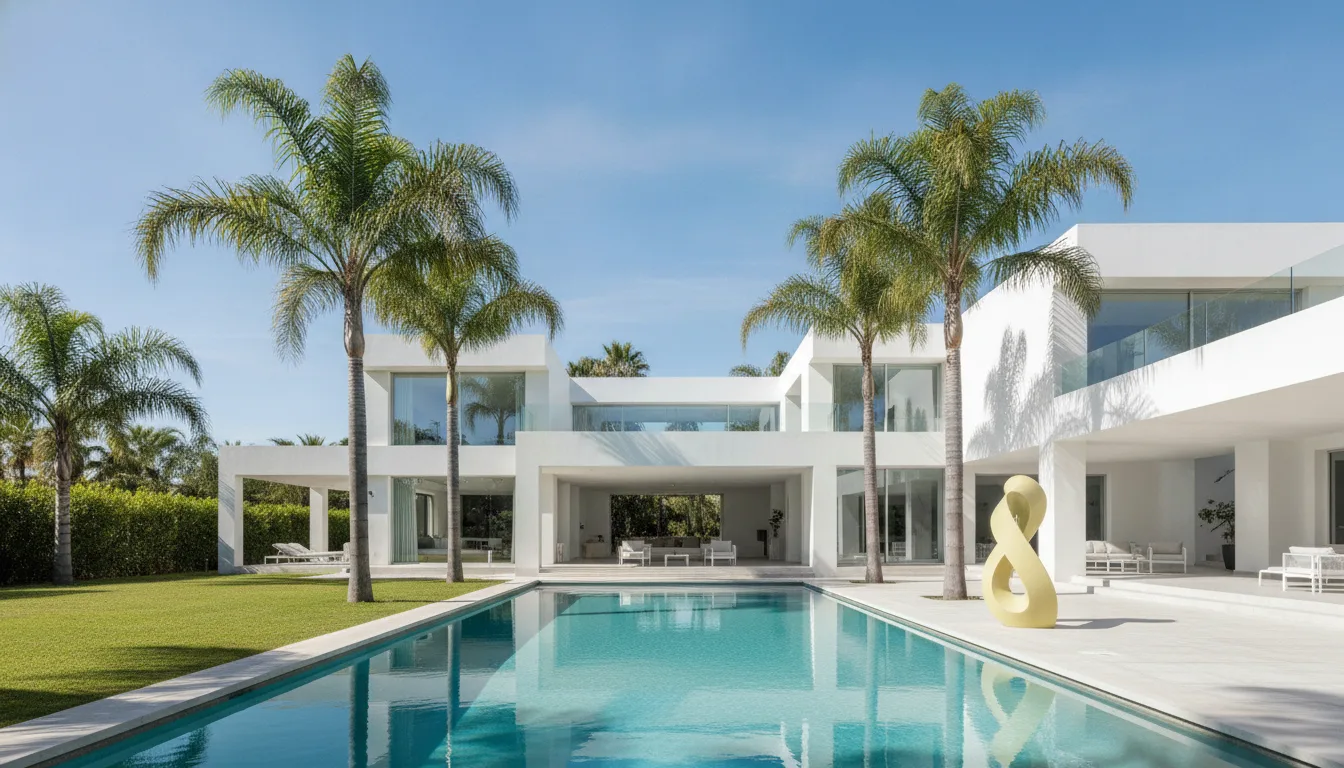
Case study: Executive selling €8 million and relocating to Dubai

The pprofile :

  • Founding Director of a tech company, planned sale in 2027 for 8 million euros (marginal cost price).
  • Decision to relocate to the UAE in 2026 with prior contribution-sale to a French holding company.
  • Holding 100 % via a new holding company created in 2026.
StageWealth effect
2026 — Contribution of securities to a French holding companyCapital gain of €7,950,000 deferred 150-0 B ter
2026 — Expatriation to the UAE with exit taxDeferral by option, guarantee of approximately 3 million on securities or bank guarantee
2026-2030 — Residence in Dubai 200+ days/yearTRC stabilization, no personal water tax
2030 — Sale of operating securities by holding companyTaxable capital gain for holding company (corporate income tax, but parent-subsidiary regime option not applicable for disposal)
2030+ — Distribution of dividends from holding company to UAE executiveWithholding tax under the France-Water Convention [TO BE VALIDATED]
Cost of bank guarantee, deferred exit tax over 15 years (estimate)€200,000 to €400,000 cumulative

Advantages and limitations of the Dubai option

Benefits

  • No personal taxation on income, dividends, capital gains.
  • No inheritance or gift tax.
  • Remarkable institutional stability.
  • Established international private banks (HSBC, UBS, Standard Chartered, BNP Paribas Wealth).
  • Global air connectivity.
  • A favorable tax climate for entrepreneurs and investors.

Boundaries

  • Suspended sentence exit tax optional with required guarantees (bank guarantee 0.5 to 1.5 % per year of the guaranteed amount).
  • Physical substance required (90 to 200 days depending on configuration).
  • High cost of living (housing, international schooling).
  • An older tax convention that is less protective than recent European conventions.
  • Anglo-Saxon civil succession system requiring specific estate planning.
  • Increased regulation since 2023 (corporate tax 9 %, ESR substance economic regulations).

What is the ideal profile?

  • Business owner selling between 5 and 30 million euros, actively engaged in operational or entrepreneurial activities, physically mobile, without strong family ties retained in France (spouse and children able to support or independent).
  • Non-ideal profile: retiree dependent on French medical care, manager attached to a local French ecosystem, family profile with non-transferable French schooling.

Alexis Sagnier's opinion

Dubai is not a universal tax haven for the French. It is a specific destination, suited to a precise profile: a working executive, single or a couple without strong family constraints, capable of building a real physical presence of 200 days a year.

For a retiree or a business owner seeking tranquility, Italy under the regime neo-resident Portugal, under the IFICI (Tax on Capital Gains and Investments), offers a more protective treaty framework and internationally neutralizable inheritance taxes. The firm's rule of thumb: out of 10 applications for Dubai, 3 actually finalize the relocation, 4 switch to a European destination during due diligence, and 3 postpone their project. The choice is based on the applicant's profile, never on the interest rate.

Alexis Sagnier

With over 17 years of expertise in financial engineering, Alexis Sagnier assists executives and expatriates in securing their cross-border challenges.
Founder of Balmont Conseil in 2013, he designed a rigorous methodology — Augmented Consulting — which merges high human tax expertise with the analytical power of AI.

Summarize the article using AI

The United Arab Emirates offers one of the most attractive tax regimes in the world for a tax resident Individuals: zero income tax, zero taxation on dividends, zero taxation on capital gains from the sale of securities, no wealth tax, and no inheritance tax. However, since June 1, 2023, the UAE has applied a corporate tax of 9 % on profits exceeding 375,000 dirhams (Federal Law No. 47/2022).

Establishing tax residency requires obtaining a residence visa (investor visa, property owner visa, or Golden Visa) and maintaining a physical presence of at least 90 days within any 12 consecutive months to obtain a tax residency certificate valid against French authorities. The France-UAE tax treaty of July 19, 1989, determines the allocation of taxing rights between the two states on French-source income received by Emirati residents.

The personal tax regime in the Emirates

In the United Arab Emirates, resident individual taxpayers benefit from virtually no direct taxation:

Type of incomeWater tax ratesFrance Comparison
Income from work (wages, salaries)0 %Scale up to 45 % + CSG/CRDS
Dividends0 %PFU 30 % + possible CEHR
Capital gains on securities (sale of securities)0 %PFU 30 %
Capital gains on real estate0 %19 % + 17.2 % social security contributions
Local rents WATER0 %Not applicable
Wealth tax (equivalent to IFI)NoneIFI (French wealth tax) on net real estate assets exceeding €1.3 million
Inheritance and gift taxesNoneUp to 45 % in direct line

VAT and indirect taxes

The UAE has applied a VAT rate of 5 % since 2018 (one of the lowest in the world) on consumption. Municipal taxes on rents (5 % in Dubai for residents) and tourist taxes should be noted as actual but marginal expenses compared to the direct French taxes avoided.

Corporate tax 

Since June 1, 2023, companies established in the UAE have been subject to a corporate income tax of 9 % on the portion of annual profit exceeding AED 375,000 (approximately €94,000 at the 2026 exchange rate). Below this threshold, the rate is 0 %. Companies in free zones benefit from a specific tax regime: the rate of 0 % remains on qualifying income (primarily international B2B transactions), while 9 % applies to non-qualifying income. Single family offices are generally subject to the standard tax regime.

How to obtain and maintain Emirati tax residency

Step 1 — Obtain a residence visa. 

Three main paths for a Frenchman: real estate investor visa (purchase of a property worth at least 750,000 AED, approximately €188,000, for a renewable 2-year visa), business investor visa (creation or taking a stake in an Emirati company), Golden Visa (10 years, conditions expanded since 2022 including real estate purchase of at least 2 million AED, or approximately €500,000, or specific professional skills).

Step 2 — Establish effective tax residence. 

A visa allows you to reside in the UAE, but it does not automatically establish tax residency. To obtain a Tax Residency Certificate (TRC) issued by the Federal Tax Authority, you must demonstrate physical presence of at least 183 days over 12 consecutive months for non-national residents, or 90 days if you have permanent residency, economic activity in the UAE, or your center of vital interests is located there. The TRC is required by the French tax authorities to legally establish Emirati tax residency.

Step 3 — Establish the substance of residence. 

The French tax authorities verify residency by cross-referencing several criteria: actual primary residence in the UAE, children's school attendance, main bank accounts, subscriptions (electricity, internet, telephone), and proof of presence (flights, card transactions). The general rule is to spend a minimum of 200 days in the UAE out of every 365 to strengthen your case against a post-departure tax audit.

The France-UAE tax treaty

The tax treaty signed on July 19, 1989 between France and the United Arab Emirates, As amended, this agreement is the central legal instrument for tax mobility between the two states. It notably provides for:

  • A rule for the allocation of residence in the event of dual residence (article 4) according to the criteria of the OECD model: permanent home, center of vital interests, habitual residence, nationality, amicable agreement.
  • A right to tax dividends paid by a French company to an Emirati resident with withholding tax, within the limits provided for by the convention.
  • An exemption from French taxation of capital gains realized by an Emirati resident on the sale of shares in French companies not predominantly real estate, under conditions provided for by the convention.
  • A right to tax capital gains on real estate in the State where the property is located (Article 13).

Case study: Executive selling €8 million and relocating to Dubai

The pprofile :

  • Founding Director of a tech company, planned sale in 2027 for 8 million euros (marginal cost price).
  • Decision to relocate to the UAE in 2026 with prior contribution-sale to a French holding company.
  • Holding 100 % via a new holding company created in 2026.
StageWealth effect
2026 — Contribution of securities to a French holding companyCapital gain of €7,950,000 deferred 150-0 B ter
2026 — Expatriation to the UAE with exit taxDeferral by option, guarantee of approximately 3 million on securities or bank guarantee
2026-2030 — Residence in Dubai 200+ days/yearTRC stabilization, no personal water tax
2030 — Sale of operating securities by holding companyTaxable capital gain for holding company (corporate income tax, but parent-subsidiary regime option not applicable for disposal)
2030+ — Distribution of dividends from holding company to UAE executiveWithholding tax under the France-Water Convention [TO BE VALIDATED]
Cost of bank guarantee, deferred exit tax over 15 years (estimate)€200,000 to €400,000 cumulative

Advantages and limitations of the Dubai option

Benefits

  • No personal taxation on income, dividends, capital gains.
  • No inheritance or gift tax.
  • Remarkable institutional stability.
  • Established international private banks (HSBC, UBS, Standard Chartered, BNP Paribas Wealth).
  • Global air connectivity.
  • A favorable tax climate for entrepreneurs and investors.

Boundaries

  • Suspended sentence exit tax optional with required guarantees (bank guarantee 0.5 to 1.5 % per year of the guaranteed amount).
  • Physical substance required (90 to 200 days depending on configuration).
  • High cost of living (housing, international schooling).
  • An older tax convention that is less protective than recent European conventions.
  • Anglo-Saxon civil succession system requiring specific estate planning.
  • Increased regulation since 2023 (corporate tax 9 %, ESR substance economic regulations).

What is the ideal profile?

  • Business owner selling between 5 and 30 million euros, actively engaged in operational or entrepreneurial activities, physically mobile, without strong family ties retained in France (spouse and children able to support or independent).
  • Non-ideal profile: retiree dependent on French medical care, manager attached to a local French ecosystem, family profile with non-transferable French schooling.

Alexis Sagnier's opinion

Dubai is not a universal tax haven for the French. It is a specific destination, suited to a precise profile: a working executive, single or a couple without strong family constraints, capable of building a real physical presence of 200 days a year.

For a retiree or a business owner seeking tranquility, Italy under the regime neo-resident Portugal, under the IFICI (Tax on Capital Gains and Investments), offers a more protective treaty framework and internationally neutralizable inheritance taxes. The firm's rule of thumb: out of 10 applications for Dubai, 3 actually finalize the relocation, 4 switch to a European destination during due diligence, and 3 postpone their project. The choice is based on the applicant's profile, never on the interest rate.

Alexis Sagnier

With over 17 years of expertise in financial engineering, Alexis Sagnier assists executives and expatriates in securing their cross-border challenges.
Founder of Balmont Conseil in 2013, he designed a rigorous methodology — Augmented Consulting — which merges high human tax expertise with the analytical power of AI.

Summarize the article using AI