Take a fictional example: the head of a Lyon-based mid-sized company uses his personal holding company as the hub of his property and financial investments. The 2026 Finance Act puts it in its sights: without planning, the net return on his assets may fall significantly.
The 2026 finance law is not a simple technical update; it is a redesign of the rules of the game for capital holders.
The 2026 Finance Act marks a turning point towards performance-based taxation targeted at capitalization structures and high incomes. Between the introduction of a tax on holding companies, the tightening of the differential contribution for high incomes, and the "revamping" of the Dutreil regime, wealth management strategies must now incorporate a much stricter set of compliance indicators to avoid reclassification.
- Companies : Creation of a tax on asset holding companies and reform of the amortization of goodwill.
- Individuals (HNWI) : Extension of the exceptional contribution and tightening of the CSG on capital income.
- Estate planning : Development of the Dutreil pact (exclusion of luxury assets and strengthening of conservation commitments).
- Balmont Strategy : Numerical simulation of the impact of the new 2026 scale on your holding company and your management mandates.
Key measures for companies and holding companies
The text introduces major changes, particularly for passive management structures.
1. The tax on asset-holding companies: Arbitrage tool or tax trap?
The creation of a holding company is often presented as a panacea for business leaders. However, the mathematical effectiveness of this structure depends on a meticulous management of its specific tax situation. By 2026, the holding company should no longer be seen as a mere safe, but as a tax management unit whose every cash flow must be optimized.
A. Corporate Income Tax (CIT): The engine of capitalization
The main advantage lies in the tax differential. Unlike direct personal ownership, where the flat tax (31.4%) or the progressive scale applies immediately, the holding company makes it possible to ring-fence taxation:
- Reduced rate at 15 % : Up to €42,500 in profits (subject to conditions of holding and paid-up capital).
- Normal rate at 25 % Beyond that, for the surplus profits.
- The "Snowball Effect"« By paying tax only on a fraction of your gains, you reinvest the remainder (which would have been paid to the tax authorities in your own name). Over 10 or 15 years, this leverage on gross capitalization radically transforms your net ROI.
B. The Parent-Subsidiary Regime: Optimizing Dividend Remittances
This is the heart of the matter for group leaders. When an operating subsidiary sends dividends back to the holding company:
- Near-total exemption Only a share of the costs and expenses of 5% is reintegrated into the taxable income of the holding company.
- Result An effective tax rate of approximately 1.25% (5 % x 25 % of IS) on dividends received. It is the ultimate tool to self-finance new investments or repay acquisition debt (LBO).
C. Taxation of capital gains on disposal (Equity securities regime)
Selling a subsidiary through a holding company is strategically superior to a direct sale:
- Exemption of 88 % If the securities are held for more than 2 years, only a portion of 12% is taxable.
- Beware of the risk of reclassification Balmont Conseil audits the nature of your securities. A purely passive holding company (without managing its subsidiaries) may have certain advantages challenged if its economic substance is deemed insufficient.

D. Points of vigilance "Stress Test"«
- The 3 % Tax : For holding companies mainly holding French real estate, be aware of the annual reporting obligation (no. 2746) to avoid this tax on the market value of the buildings.
- The payroll tax : If the holding company is not subject to VAT (non-operating activity), it may be liable for payroll tax on the remuneration paid to managers.
- IFI (Real Estate Wealth Tax) The holding company is not a screen. The value of the shares corresponding to the underlying real estate assets remains taxable in the hands of the manager.
Balmont's Eye : «Don’t create a holding company just to «do what everyone else is doing.» A poorly structured holding company can generate tax burdens (payroll tax, accounting fees) that exceed the expected gains. Our role is to simulate your break-even point: the precise moment when the structure becomes profitable compared to direct ownership, taking into account social security contributions and inflation.»
Need an accurate simulation? We model the impact of corporate tax on your current ownership structure.
2. Reform of the contribution-sale procedure (Art. 150-0 B ter): The new dogma of reinvestment
L'’Article 150-0 B ter Since 2012, the French General Tax Code (CGI) has been the preferred mechanism for business owners in the process of selling their company. But by 2026, the tax authorities will no longer be satisfied with a superficial reinvestment. The framework will become stricter, forcing capital towards a narrower "real economic utility," transforming what was a formality for some into a genuine financial engineering challenge.
A. The deferral mechanism: A tax suspension subject to conditions
As a reminder, this mechanism allows you to transfer the shares of your operating company to a controlled holding company before the sale. The capital gain realized on the contribution is placed under a tax deferral.
- The issue: Keep 100% of the gross capital to reinvest, instead of bearing the flat tax (31.4%) immediately.
- The breaking point: If the holding company sells the shares less than three years after the contribution, it is legally obligated to reinvest. at least 60 % of the proceeds from the sale in an eligible economic activity.
B. 2026 tightening: Towards restricted eligibility of investment vehicles
The 2026 reform introduces a subtle but critical change to the nature of reinvestments:
- The exclusion of "too liquid" funds: The tax authorities have observed a massive use of Private Equity funds (FPCI) whose composition is considered too similar to cash management. Now, a a body of evidence eligibility is assessed based on the actual risk of capital loss and the duration of the immobilization of funds.
- Enhanced operational real estate: Reinvestment in real estate remains possible, but only if it is linked to a hotel, aparthotel, or assisted living facility (EHPAD) activity with genuine management autonomy. Simple furnished rentals (LMNP) through a holding company are increasingly being challenged under this system.
C. The risk of the deferral becoming invalid: Post-transfer monitoring
1. The 24-month deadline: A countdown with no exceptions
The two-year period for reinvesting 60 % of the proceeds from the sale is a matter of public policy.
- The classic trap: Wait until the 23rd month to select a private equity fund. If the fund does not proceed with the capital call (the closing) before the anniversary date, the reinvestment is not legally consumed.
- Balmont's response: We incorporate a 6-month "safety margin" into our engineering schedules to compensate for administrative delays from management companies.
2. Maintaining economic activity: The requirement of substance
The 2026 reform emphasizes the concept of active management.
- Acquiring shares in a company that does not have its own material or human resources (a "shell" company) can be reclassified as simple asset management.
- Reinvestment must be made in companies engaged in commercial, industrial, craft, professional, or agricultural activities. The activity of "managing one's own movable or immovable assets" is explicitly excluded.
3. The financial consequences of a reclassification
In the event of lapse, the taxpayer suffers a triple shock:
- The main point: Immediate payment of the flat tax (31.4%) or progressive-scale tax on the initial capital gain.
- Late payment interest: Calculated from the date of the contribution (and not the transfer), which can represent a substantial increase after 3 or 4 years.
- The penalty for non-compliance: If the administration proves a deliberate intention to evade tax (no real attempt at reinvestment), a surcharge of 40 % may be applied.
4. The Balmont «Stress Test»: Securing the length of detention
Another often overlooked cause of obsolescence is the failure to comply with the retention period for new securities. The assets into which the 60 % have been reinvested must generally be held for at least 12 months (or 5 years for some funds).
Balmont's Eye: «"Expiry is the executive's 'black swan'. We analyze the exit clauses of private equity funds and the leases of real estate assets to ensure that no early liquidity event breaks the deferral. We don't just manage your performance; we manage your tax calendar until the natural extinction of the risk."«
D. Advanced Strategies: Multi-pocket Reinvestment
Faced with the obligation to reinvest 60 % of the proceeds from the sale Within 24 months, the fatal mistake a leader can make is rushing towards a single solution ("single-product"). By 2026, asset agility will require a strategy multi-pocket. This approach involves fragmenting reinvestment to decouple risks, optimize return cycles and ensure tax compliance, even in the event of failure of one of the underlying assets.

1. The "Operational Real Estate" Pocket (Security & Yield)
The goal here is to capture recurring revenue. We favor so-called "active" real estate assets, where the company does not simply rent out premises, but also provides services.
- Hotels and related accommodations: Reinvestment in structures operating tourist or business residences. This is the preferred method for validating the "economic" nature of the investment in the eyes of the tax authorities.
- Healthcare Real Estate: Nursing homes or clinics, often through equity investments in specialized operators.
2. The "Institutional Private Equity" Portfolio (Performance & Growth)
To boost tax deferral, a portion of the funds must be directed towards the real, unlisted economy.
- Eligible FPCI (Professional Private Equity Funds): Please note that in 2026, we will verify that the regulations of each fund strictly comply with the quotas for investment in community SMEs.
- The Club Deal: Co-investing with other entrepreneurs in SMEs in the "scale-up" phase. This allows for more direct control than in a traditional fund.
3. The "Private Debt and Infrastructure" Pocket (Visibility & Stability)
To stabilize the holding company's portfolio, reinvestment in SME debt or infrastructure projects (renewable energy) offers visibility on coupons, often superior to traditional bond markets.
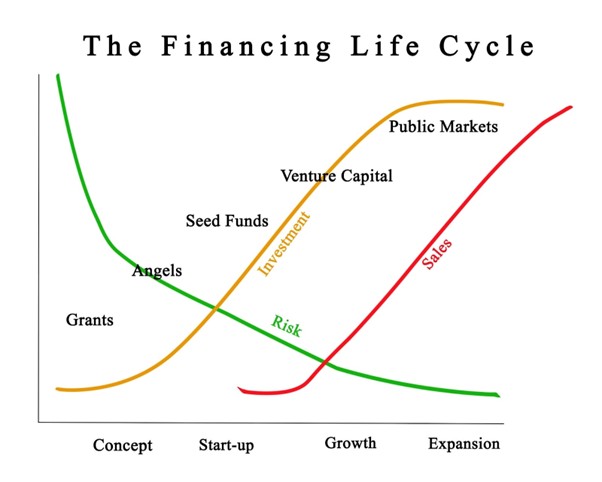
4. Managing the Reinvestment Timing
Multi-pocket reinvestment is a logistical challenge. We establish the deployment schedule :
- Phase 1 (M0-M12): Selection and commitment to Private Equity instruments (often lengthy to formalize).
- Phase 2 (M12-M18): Acquisition of real estate assets or shares in operating companies.
- Phase 3 (M18-M24): Final adjustment on eligible liquid instruments to reach exactly the quota of 60 %.
Alexis Sagnier's view: «The multi-pocket strategy is the only one that transforms a tax constraint into a global diversification opportunity. In 2026, the risk is not just paying tax, but getting 'locked in' a bad investment due to a lack of foresight. My role is to ensure that your 60% of reinvestment becomes the new engine of your wealth, not its Achilles' heel.‘
Beware of the concentration effect: Too many executives concentrate their reinvestment on a single fund, exposing themselves to the total lapse of the deferral if the fund does not meet its own investment quota.
Impact on individuals: The high-income differential contribution
By 2026, taxation of high incomes will no longer be limited to the progressive income tax scale or the flat tax. Differential Contribution on High Incomes (CDHR) has established itself as a complex fiscal «safety net» mechanism, aimed at guaranteeing a minimum effective tax rate for the wealthiest taxpayers.
1. The mechanism of the floor rate: The illusion of the flat tax
The CDHR breaks the linearity of the flat tax (31.4%). For tax households whose reference tax income (RFR) exceeds certain thresholds (generally €250,000 for a single person and €500,000 for a couple), the tax authorities check whether the actual tax burden reaches a floor rate of 20 %.
- The trap: If your tax breaks (investments, gifts, tax relief schemes) bring your average rate below this threshold, the CDHR will take action to collect the difference.
- Balmont's analysis: It's no longer an income tax, it's a tax on tax optimization.
2. The impact on exceptional income (Sales and Stock Options)
It was during the phases of’Exit (sale of company) or fundraising Stock options / RSU that the impact is the most brutal.
- A manager who realizes a significant capital gain may see their tax bill increase by several percentage points, rendering their initial "net-net" calculations obsolete.
- For the Expatriates, The CDHR can also be applied to income from French sources, creating additional friction with international tax treaties which did not always provide for this type of "hybrid" contribution.
3. Circumvention and encrypted control strategies
Faced with the CDHR, the "blind" tax avoidance strategy has become counterproductive. Balmont Conseil relies on numerical simulations to control your trajectory:
- Income Smoothing: Arbitrating between receiving dividends and capitalization within a holding company to avoid erratically crossing trigger thresholds.
- Choosing the envelopes: Prioritize the’Luxembourg assurance-vie or the Capitalization which allow us to decouple wealth growth from RFR generation.
- "Comfort Zone" Audit: We calculate for each client their "tax break-even point": the exact amount of optimization possible before the CDHR neutralizes the desired advantage.
Alexis Sagnier's view: «"The CDHR marks the end of the era of massive and uncalculated tax avoidance. Today, optimizing without simulating the impact on your Reference Tax Income means exposing yourself to an immediate tax reassessment. At Balmont, we don't seek to reduce taxes at all costs, but to stabilize your effective tax rate to avoid confiscatory threshold effects."»
Warning: Please note that the automatic application of these thresholds depends on your family composition and the nature of your income (French or foreign source). Incorrect settings on your tax return may trigger an automated tax audit starting at the end of 2026.
Is your actual tax liability under scrutiny? Don't let an exceptional income trigger an avoidable contribution. We simulate the impact of the CDHR on your 2026 situation.
Transfer and Succession: The New Face of the Dutreil Pact
The Dutreil pact (Art. 787 B of the French General Tax Code) remains, in 2026, a major tool of the’wealth engineering French, allowing for a reduction in the tax base for transfer taxes 75%. However, the current reform is transforming this "tax haven" into a highly monitored zone. The administration is no longer content with simply verifying the signatures on documents; it is now scrutinizing the operational substance of the transferred company.
1. The exclusion of "luxury" assets: The end of leisure real estate
This is the major change for 2026. Previously, an operating company could hold comfort assets (second homes, yachts, works of art) which indirectly benefited from the Dutreil tax break.
- The rule: The value of these assets is now adjusted. The 75% reduction (%) only applies to the portion of the company's value corresponding to these assets. necessary to the exercise of the activity.
- The risk: An overcapitalization in non-professional assets can weaken the overall eligibility of the pact if they become predominant.
2. Strengthening the concept of commercial activity
The line between active (eligible) and passive (excluded) holding companies has become more porous under the eye of the tax authorities.
- A body of evidence: To validate the animation, the holding company must prove an active participation in the conduct of the group's policy and a provision of internal services (accounting, HR, strategy).
- Balmont Audit: We audit management fee agreements and management reports for the past three years. A lack of documentary "substance" is the primary cause of forfeiture of the Pact.
3. Managing conservation commitments
Adherence to the timetable is the second critical point. The Pact is based on two phases:
- Collective commitment (2 years) It must be in progress at the time of transmission.
- The individual commitment (6 years for transfers since 21 February 2026) The heirs or donees must retain the securities and one of them must hold a management position.
- Innovation 2026: The law now facilitates "Dutreil post-mortem" agreements (signed after death by the heirs), but with extremely tight time constraints (6 months).
4. Coupling with the split of ownership
To maximize the effectiveness of the transfer, we often recommend donating the bare ownership shares under the Dutreil Pact.
- The winnings: You transfer the future value of the company while retaining the usufruct (income/dividends).
- Optimization: Transfer taxes are calculated on the value of the bare ownership (according to the scale in Article 669 of the French General Tax Code) after a 75% allowance. On a company valued at €10 million, the tax burden can be reduced tenfold.
Alexis Sagnier's view: «The Dutreil Pact is a contract of trust with the State. In 2026, the State will only honor its share (the tax reduction) if you prove yours (the maintenance of employment and investment). My role is to ensure that your evidence file is unassailable even before the first signature is placed. A smooth transfer of ownership is prepared 24 months in advance, not in the rush of an open inheritance.»
Pay attention to the steering function: Failure by one of the signatories to comply with the management obligation during the 3 years following the transfer results in the total lapse of the pact for all members.
Timetable and entry into force
Most of the measures come into effect on January 1, 2026. However, some provisions concerning the tax on holding companies provide for transitional periods to allow for the rebalancing of balance sheets.
Summary of changes to the 2026 Finance Law
| Measure | Target | Tax Impact | Entry into force |
| Holdings Tax | Passive companies | 20% on certain dividends | 01/01/2026 |
| Differential Contribution | High incomes (RFR > €250k) | Minimum effective rate 20% | 2025 Income (declaration 2026) |
| Dutreil Reform | Family businesses | Exclusion of non-operating assets | Post-vote transmissions |
| Amortization of commercial funds. | SMEs | End of temporary deductibility | Financial years ending in 2026 |
Balmont Conseil's expertise: Managing in uncertainty
Faced with this complexity, the Balmont Conseil method becomes particularly relevant. We subject your assets to "Stress Tests" in light of the new legislation.
We analyze each a body of evidence (Your holding company structure, international tax treaties if you are an expatriate, and your succession plan) to determine if your current structure remains the most efficient. We quantify each reinvestment scenario and then validate the legal soundness of the structure.
Alexis Sagnier's view: «"Optimization is only effective if it is done calmly. My role is to protect your assets against the changes expected in 2026. Don't be a victim of the 2026 finance law; integrate it as a variable in your overall strategy."»
Answer Capsules (FAQ)
Does the holding company tax apply to SCIs?
It primarily targets companies subject to corporate income tax. Real estate investment companies (SCIs) subject to personal income tax (IR) are generally excluded, unless they are held by a company subject to corporate income tax for the purpose of passive capitalization. Each case requires an analysis of its economic substance.
How does the law impact expatriates?
The extension of the exceptional contribution may impact the French-source income of non-residents. Furthermore, the reform of the capital contribution-sale regime tightens the conditions for maintaining the deferral in the event of departure abroad (Exit Tax).
Is it still possible to amortize goodwill in 2026?
The 2026 Finance Law reverses the flexibility granted during the COVID period. Tax depreciation will once again become the exception, impacting the taxable income of SMEs engaged in external growth.
Conclusion: Anticipate to avoid being overwhelmed
The 2026 Finance Law confirms an underlying trend: the tax authorities have increasingly powerful tools for identifying passive management and for taxing high-net-worth individuals. In this environment, inertia is a risk.
Only one asset audit A comprehensive 360° approach, incorporating the new 2026 guidelines, can guarantee that your growth trajectory is protected.
Optimization is only effective if it's done calmly. My role is to protect your assets against the changes expected in 2026.
Take action: Is your holding company subject to the new 20% tax? Is your Dutreil Pact still compliant with the new holding requirements?
Sources & References
- 2026 Finance Bill – National Assembly.
- General Tax Code: Articles 150-0 B ter, 155 B, 787 B (Dutreil Pact).
- Reports from the Council of Mandatory Levies on wealth taxation.
Useful links
To learn more: Case study: reinvesting €5 million after a sale, using the contribution-sale (150-0 B ter).